Sign in. It’s quick, free and it’s up to you.
An account is an optional way to support the work we do. Find out more.
Sign in. It’s quick, free and it’s up to you.
An account is an optional way to support the work we do. Find out more.
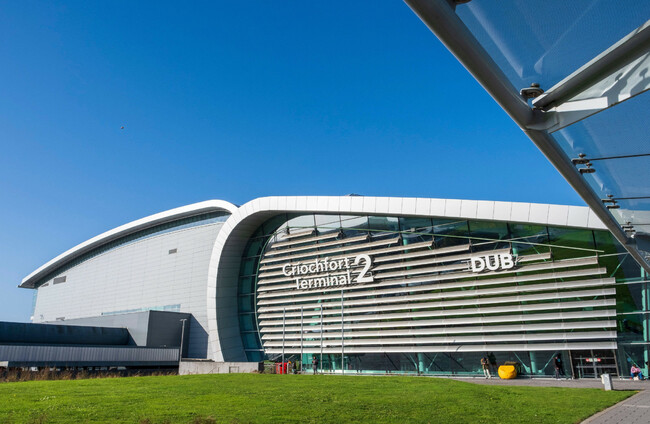

OUR MINDS ARE now so suffused with content that it’s easy to overlook how we’ve accepted a piece of national transport infrastructure acting like a blokey mate.
At some point in the past couple of years, Dublin Airport’s official account on X developed the personality of a male aged 35-44.
The page still does everything you’d expect of an airport’s social media channel – warning about flight delays and announcing new shops and restaurants – but has added memes, tributes to beloved celebs and potshots at rival sports fans to its repertoire.
I don’t remember choosing to pay attention to it. Like most things online, it simply kept appearing until I noticed at some point that its posting style was part of a wider trend.
While anthropomorphism isn’t a new form of digital marketing, Dublin Airport’s banter era is part of a wider online trend of brands pretending that they’re your buddy.
Who is asking for this?
Apparently it’s us, the hulking monolith of consumers and scrollers who are more likely to notice and engage with an entity if it can briefly convince us there is a person behind the logo.
The other awkward answer is that the platforms are asking for it too, because they reward anything that behaves like a person, even when the “person” is a semi-state airport authority.
I’m aware I’m coming across like a fun sponge: traditional corporate language and marketing jargon is banal anywhere, but looks especially out of place among the bottomless cornucopia of hot takes and thirst traps on social media.
Adopting a human voice and humour can make useful information more readable, and even I can admit that corporate banter posts can occasionally be genuinely funny.
The problem is that the strategy cedes what little humanity remains on social media to corporations, allowing them to pretend that they’re just like us while selling us stuff.
Occasionally, human error steps in to remind us how absurd this is, as happened this week when Dublin Airport posted a legally worded apology on X for overzealously dismissing a journalist’s claims of an evacuation at the airport in March.
Such incidents are cringeworthy because they reveal how much effort has actually gone into attempts to appear effortless online.
It is a tiny version of the wider bargain on social media: we reward corporations for seeming human, then recoil when the machinery of that performance becomes visible.
When the sense of authenticity falls flat, we’re reminded of the engagement and branding strategy beneath it, and that it’s anything but spontaneous.
To state the most obvious thing you’re likely to read this weekend, airports are not people.
But social media is the great equaliser: friends, politicians, football clubs, municipal councils and supermarket chains are all competing on a level playing field.
We all just have to get on with it, even if I don’t particularly want a human-like relationship with a building designed to facilitate my journey to another similar building in a different country.
Some companies have taken this to extreme ends.
One well-known low-budget airline has absorbed complaints about cramped seats and extra charges into its online personality, turning dissatisfaction into a marketing tactic.
It’s an approach that at least lets us know what brands think of us, but it’s a grim indictment of consumer capitalism that we are now being sold our own unhappiness online rather than being given an improved service when we complain.
And it’s exactly how sociologists Luc Boltanski and Ève Chiapello described capitalism’s ability to survive by absorbing critiques made against it.
Corporate banter accounts are a small but revealing example of this process.
The stilted, impersonal voices of old companies became unfamiliar and artificial, so brands responded by adopting the language and other reactions used to mock them.
They took on the traits of individual social media users by sharing memes, posting about trending topics for fun, writing about themselves self-deprecatingly, and posing as irreverent outsiders.
It doesn’t necessarily mean that the people behind these social media accounts are insincere, but their humour and their humanity are being deployed institutionally.
And the cost is a subtle colonisation of our shared social space.
So much of our everyday culture and offline talking points are now defined by what happens online, but the conversations that happen on social media have now become a shameless opportunity for commercial actors to build familiarity with us.
The relationship is fundamentally one-sided because the people who make up shared online spaces are the ones who pay the price, or have to adapt by turning those spaces into something else.
The example of Dublin Airport also seems difficult to understand because it’s not a traditional a consumer brand fighting for attention in a supermarket.
It’s a piece of vital national infrastructure that already has so many passengers that Ireland recently had to pass legislation to let even more people fly through it.
I’m not a social media marketing or PR guy, and am aware that the people behind the Dublin Airport account are just doing their jobs.
I asked DAA’s communications team what was behind their strategy and was told by a spokesperson in a lengthy statement that their approach was “considered and evidence-based” and that they wanted to be “clear, human and relatable”.
I won’t re-hash the entire statement here, but it was clear about why the account has adopted its strategy and its reasons for leaning into big cultural moments, which include increasing its reach and making the airport feel a bit more approachable.
Ultimately, the spokesperson said, the company’s goal is to ensure passengers actually see information and remember it, which a bit of humour and personality helps with.
One has to ask what would happen if every corporate account started doing this though, particularly when they clearly know how to communicate effectively in other ways.
Not every company or public body needs a posting persona to provide public service announcements or create brand awareness.
I’d rather be bored than bantered with. Please stop trying to be one of the lads.

To embed this post, copy the code below on your site













have your say